Power and Precision: Comparing Industrial Winch Specifications
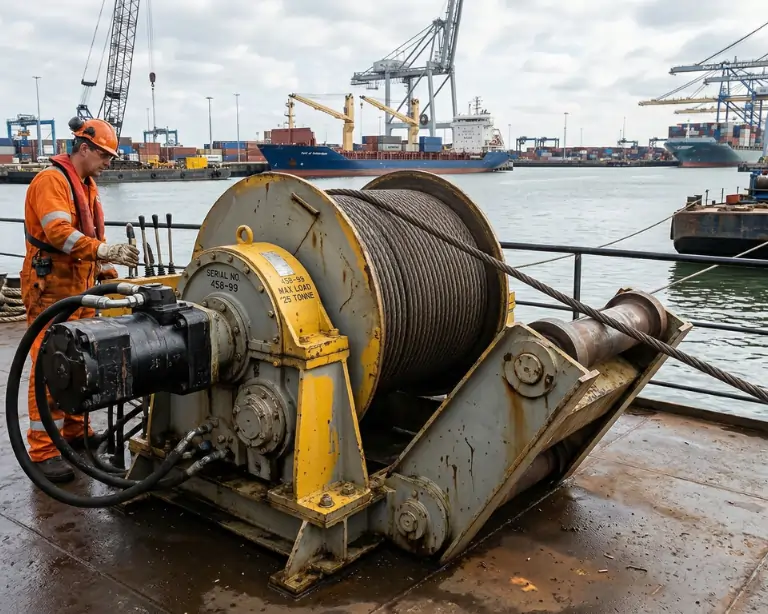
Offshore Towing Winches: Built for the Wild Blue
Offshore towing is a beast of its own. You need a machine that can handle “shock loading” that sudden jerk when a wave hits the towed vessel. Because of this, most offshore towing winches are hydraulic.
Hydraulic systems provide a level of “give” and high torque that electric motors struggle to match in heavy-sea states. At Seven Seas, we often recommend hydraulic winches for marine use because they are inherently resistant to the corrosive saltwater environment. These winches aren’t just powerful; they are built with marine-grade coatings to prevent rust from eating your investment.
The Power of Constant Tension
In the marine world, a “slack” line is a snapped line. Many offshore winches feature constant-tension systems. This technology automatically adjusts the line to keep it taut as the boat tosses and turns.
- Material Matters: Use stainless steel or galvanized wire ropes to fight the salt.
- Braking Systems: Look for "fail-safe" multi-disc brakes that lock the load even if power is lost.
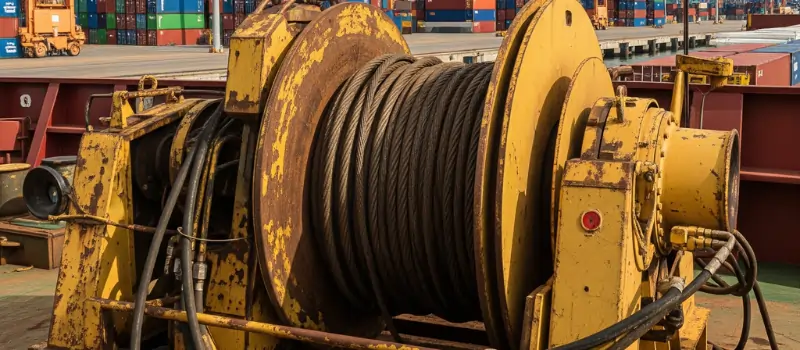
Construction Winches: The Masters of the Vertical
In industrial construction, the game changes from “pulling” to “hoisting.” Here, industrial winch specifications lean heavily toward precision. When you’re positioning a steel beam 40 stories up, a few millimeters matter.
Electric winches are the stars of the construction site. They offer “stepless” speed regulation, meaning you can crawl the load up at a snail’s pace for perfect alignment. Seven Seas supplies a range of heavy-duty electric winches designed for 120V to 440V systems, ensuring they fit standard site power without needing a separate hydraulic power pack.
Safety First: Construction Site Rules
Construction winches must follow strict safety protocols. Since these machines often lift things over people’s heads, the margin for error is zero.
- Overload Protection: Systems that shut down the motor if the weight exceeds the safe limit.
- Emergency Stops: High-visibility buttons that cut power instantly.
- Limit Switches: These prevent the hook from crashing into the drum (over-winding).
Maintenance: The Silent Project Saver
Whether it’s marine or construction, a broken winch is an expensive paperweight. At Seven Seas, we see it all—from frayed cables to burnt-out motors. Regular winch repair and maintenance aren’t optional; they are your insurance policy against downtime.
We recommend a “Check-Before-Use” policy: Inspect the cable for kinks, check the oil levels in the gearbox, and test the brakes every single morning. A ten-minute check can save a ten-day delay.
Final Thoughts on Industrial Winch Specifications
So, which do you need? If your job site involves salt, waves, and massive pulling force, go hydraulic offshore. If you’re lifting heavy loads on a build site where precision is king, electric is your best bet.
FAQ
Can I use a construction winch for offshore towing?
The short answer? No. Construction winches usually lack the UV protection and corrosion-resistant coatings needed for the sea. Plus, they aren't designed to handle the dynamic "snap" loads of ocean waves.
What is the most important spec to look for?
Load capacity is #1, but don't forget the "Duty Cycle." This tells you how long the winch can run before it needs to cool down. A high-capacity winch with a low duty cycle will overheat on a busy site.
How often should I replace my winch cable?
Don't wait for it to snap. If you see more than 10% of the wires in one strand are broken or if there's significant rust/pitting, replace it immediately. It’s cheaper than an accident.
Are electric winches waterproof?
Some are "water-resistant" (IP65 or IP66 rated), but they aren't meant to be submerged. For truly wet environments, hydraulic or pneumatic winches are much safer bets.