Certified Marine Fabrication Standards: Why They Matter
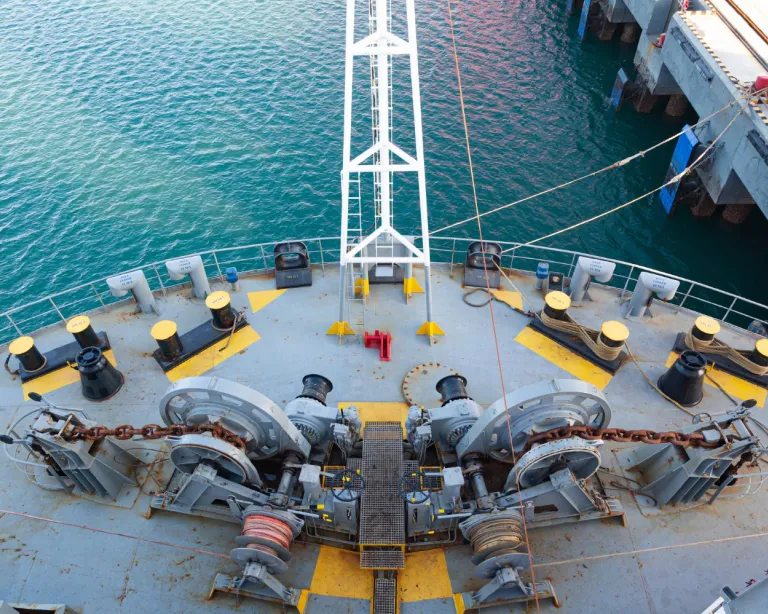
You’re operating in the Gulf. The salt, the heat, and the pressure are relentless. In the UAE’s marine industry, adhering to certified marine fabrication standards is the only way to avoid a disaster. When a component fails offshore, you aren’t just looking at a repair bill; you’re looking at downtime, safety risks, and massive liability.
That’s where specific benchmarks come in. We’re talking about ASME and Lloyd’s Register. These aren’t just badges to stick on a website. They are the difference between a part that survives the Arabian Gulf and one that disintegrates. At Seven Seas, we build for the long haul.
What Are Certified Marine Fabrication Standards?
Certified marine fabrication standards are a set of strict engineering and safety rules like ASME or Lloyd’s Register that ensure metal parts can handle high-pressure and corrosive sea environments. To meet these rigorous demands, our specialized steel and metal fabrication services focus on structural integrity and long-term durability. Essentially, they prove a component was built, tested, and inspected to survive the toughest conditions on earth.
The ASME Difference in Pressure Vessels
The American society of mechanical engineers (ASME) sets the gold standard for anything under pressure. If you are fabricating heat exchangers or pressure vessels for a vessel in Dubai, the ASME stamp is your insurance policy. It means the welding, the material thickness, and the stress testing aren’t based on guesswork. They’re based on physics.
Why Lloyd’s Register is the UAE Marine Benchmark
Lloyd’s Register is about offshore integrity. In the UAE, where maritime trade and offshore oil are the lifeblood of the economy, Lloyd’s provides the framework for risk management. They look at the manufacturing process from start to finish. If your fabrication partner isn’t following these protocols, you’re gambling with your fleet.
Why Should You Care About Certified Marine Fabrication Standards?
Safety and legal compliance are the big ones. But from a business perspective, it’s about asset lifespan. A non-certified part might be cheaper today, but it’ll fail twice as fast. In the marine sector, replacing a part mid-voyage is ten times more expensive than doing it right the first time in the shop.
Precision Machining and Custom Needs
Every ship is different. Standardized parts don’t always fit. This is where precision machining meets certification. You need custom-built components that still meet the high-bar requirements of international shipping. Whether it’s engine parts or structural frames, the metal needs to be treated with absolute accuracy.
Facing the Corrosive Arabian Gulf
The water here is saltier and warmer than in many other parts of the world. This accelerates corrosion. Certified fabrication ensures that the alloys used and the welding techniques applied are specifically rated for these high-salinity environments. It’s about choosing the right grade of steel and the right welding rod for the job.
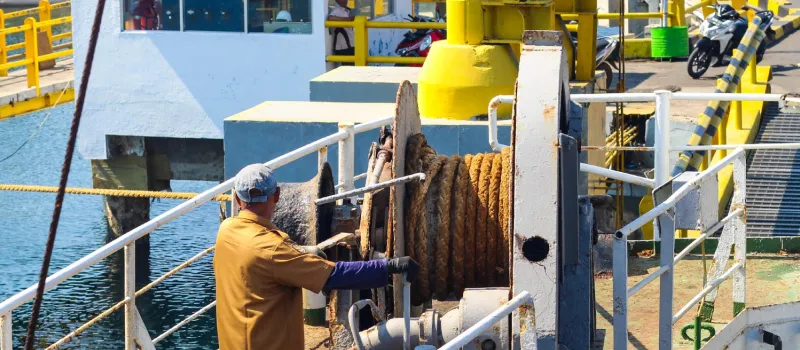
How to Choose a Fabrication Partner in the UAE?
Don’t just look for a shop with a lathe and a welding machine. Look for a team that understands documentation. A real partner provides the paperwork that proves the material origin and the test results.
Deep Technical Expertise
At Seven Seas, our facility is geared toward heavy-duty industrial needs. From CNC machining to complex assembly, the focus is on repeatable quality. We don’t just cut metal; we follow a blueprint that respects the engineering demands of the marine industry.
Reliability Under Pressure
When a rig goes down or a tanker is delayed, every hour counts. You need a fabricator that can deliver certified parts on a tight schedule without cutting corners on the inspection process. High-quality marine fabrication is a mix of speed and strict adherence to the rules.
Final Thoughts
Cutting corners on certifications might save a few Dirhams now, but the sea always finds the weak spot. Are your current marine components actually rated for the job they’re doing?
FAQ
Do I really need ASME certification for simple parts?
If it’s a bracket for a shelf? No. If it’s holding pressure, carrying a load, or critical to the ship’s hull? Absolutely. It’s about risk. If that part fails, what’s the worst-case scenario? If the answer is "someone gets hurt" or "the ship stops," get the certification.
Is Lloyd's Register better than other class societies?
"Better" is the wrong word. It’s about recognition. In the UAE and the UK, Lloyd’s is the heavy hitter. It’s widely accepted and highly respected by insurance companies. Using them makes your life much easier when it comes to surveys and inspections.
Why is marine-grade steel so much more expensive?
Because it’s fighting a war against salt. Marine-grade steel has specific elements added to prevent it from pitting and rusting through in weeks. You’re paying for the chemistry that keeps the ship afloat.
Can any welding shop do marine fabrication?
Maybe. Safely? No. Marine welding requires specific certifications (like 6G positions) and knowledge of how sea-water affects weld points. A gate welder is not a ship welder. Know the difference before you hire.