Marine Winch Inspection Checklist for UAE Fleets
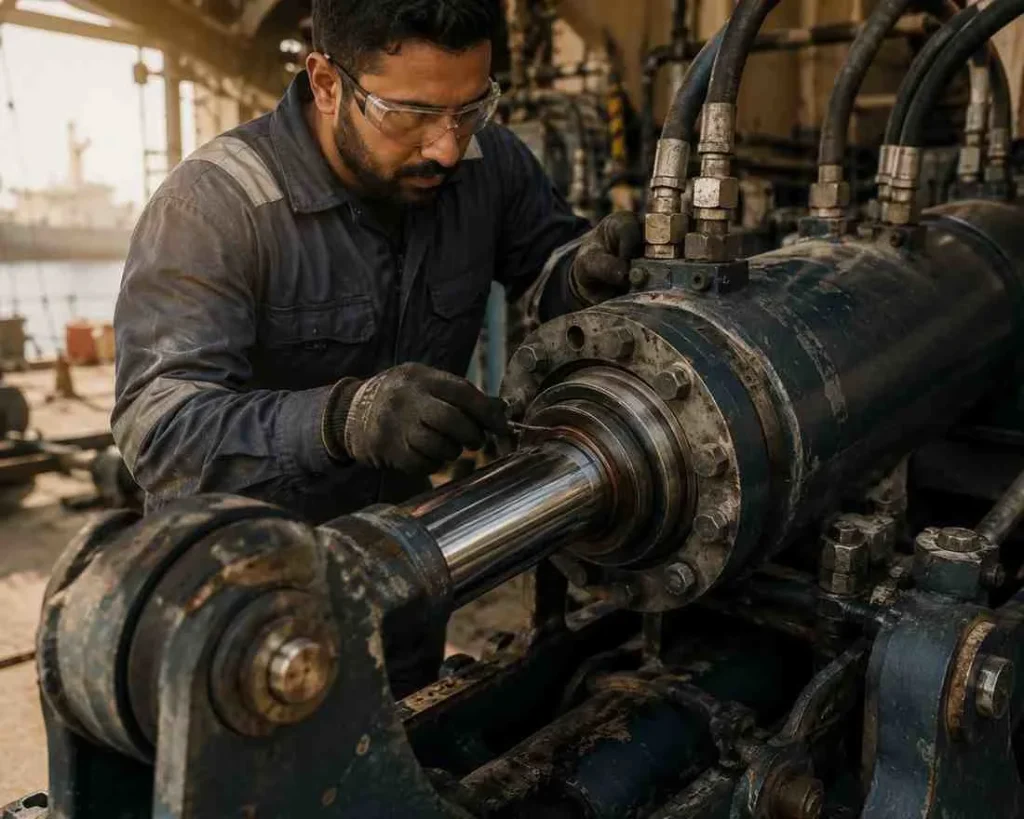
Salt air and constant heat do more damage to a winch in a single Gulf summer than most equipment sees in years elsewhere. A proper marine winch inspection catches that damage while it is still a five-minute fix, not a dockside emergency. For anyone running mooring winches, anchor winches, or hauling gear across Dubai, Abu Dhabi, or Sharjah, knowing what to check and how often is the difference between planned maintenance and an unplanned shutdown.
What a Marine Winch Inspection Checklist Actually Covers
A winch is really three systems working together: the motor that drives it, the brake that holds it, and the cable and drum that carry the load. A winch maintenance checklist has to look at all three, because a fault in one usually shows up as a symptom in another. Brake linings wear slowly and then fail fast. Cables fray from the inside, where nobody sees them, until load testing exposes the weak point. Lubrication breaks down in high heat faster than most maintenance schedules account for.
Electric winches carry their own failure pattern in this climate. Motor windings degrade under sustained heat, control boards fail from dust ingress, and brake solenoids seize when salt air works into the housing over months of exposure. Wharf handling and repeated pipe work push these motors through constant stop-start cycles, and that cycling is usually where wear shows up first during inspection.
Mooring Winch Brake Inspection and Cable Condition
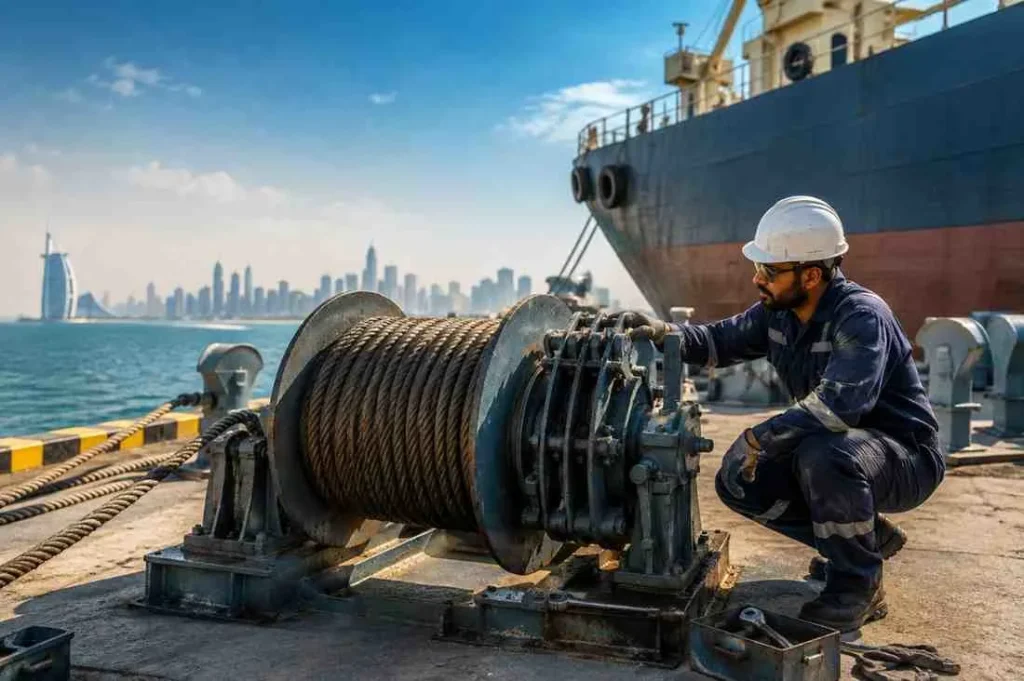
The brake lining is the single most safety-critical part of a mooring winch, and it is also the most overlooked. A brake that has lost holding capacity will not announce itself during normal operation. It shows up under load, which is the worst possible moment to discover it. Inspectors check brake linings, cable tension, drum surface condition, and lubrication as a set, not one at a time, because a worn drum accelerates cable wear and a weak brake puts more strain on the cable to compensate.
A frayed cable is never just cosmetic. On a mooring winch or anchor winch holding a vessel against current and tide, a compromised cable is a direct safety risk to anyone on deck. Drum resurfacing and cable replacement usually get scheduled together for that reason, along with brake lining checks as a standard part of mooring winch brake lining service.
Hydraulic Winch Seals and Pneumatic System Checks
Hydraulic winches fail for a short list of reasons, and inspection is built around ruling each one out. A worn seal lets pressure bleed off gradually, which shows up as sluggish or inconsistent pulling long before total failure. A cracked hose, flexed thousands of times under load, is next on the list. A tired pump rounds it out. Inspection means opening the unit, testing under real pressure, and confirming the fix holds before the winch goes back into service. Offshore, a hydraulic winch failure is a safety incident, not a scheduling delay, so sign-off only happens once pressure testing confirms the repair.
Pneumatic winches introduce a different variable: humidity. Air lines leak, valves stick, and moisture works its way into the system, corroding components from the inside before any drop in pulling power is even noticeable. A full inspection tests the entire air system rather than the obvious failure points, replacing worn valves and seals and clearing moisture before it spreads further into the unit.
How Often Should Marine Winches Be Inspected?
Inspection frequency should follow both operational load and the regulatory framework a vessel operates under. Recent amendments to SOLAS regulation II-1/3-8 introduced formal guidelines for the inspection and maintenance of mooring equipment, including winches, with documented records now expected to be kept on board and available for periodic survey. That regulatory shift reflects a wider industry pattern: most winch failures are preventable, but only if wear gets caught on a set schedule rather than whenever someone happens to notice a problem.
A structured maintenance program checks brake linings, cables, lubrication, and motor performance on a fixed interval, not an informal one. Building that into standard operations, rather than reacting after a breakdown, tends to cost far less than the failure it prevents.
Final Thoughts
skipped until something breaks. Building brake, cable, motor, and seal checks into a fixed schedule protects both the equipment and the people working around it. If it has been a while since your last full inspection, or you are not sure what your current maintenance log actually covers, Seven Seas Machinery can point you toward the right team to start with. When was the last time someone checked your winch under real load rather than just visually?
FAQ
How often should a marine winch be inspected?
Most operators run a full inspection on a fixed schedule rather than waiting for a symptom, often quarterly for heavy-use winches and at minimum during scheduled dry dock or survey periods. Mooring winches under newer SOLAS guidance need documented inspection records kept on board.
What's usually the first thing to fail on a marine winch?
Brake linings and cables tend to show wear before the motor does, especially on mooring and anchor winches under constant load cycling. Electric winch motors run a close second in high-heat, high-humidity conditions, since windings and control boards take steady thermal stress.
Can a hydraulic winch be repaired without replacing the whole unit?
Yes, in most cases. Seals, hoses, and pumps are the parts that typically fail, and each can be rebuilt or replaced individually once the unit is opened and pressure-tested. Full unit replacement is usually only needed when internal damage runs deeper than the pump and seal assembly.
Why do pneumatic winches corrode from the inside?
Humidity gets into the air system through leaking lines or worn seals, and moisture sitting inside valves and lines starts corroding parts before any drop in performance is visible from the outside. That is why a full air system test matters more than a visual check on these units.
Is a frayed mooring winch cable actually dangerous, or just something to fix eventually?
It is dangerous, not cosmetic. A cable under load that has already started fraying can fail without warning, and on a mooring winch that is holding a vessel against tide and current, that failure puts anyone nearby at direct risk. Cable condition should be checked every time the brake and drum are inspected, not on a separate schedule.