Best Metal Coating Services for 45°C Marine Heat
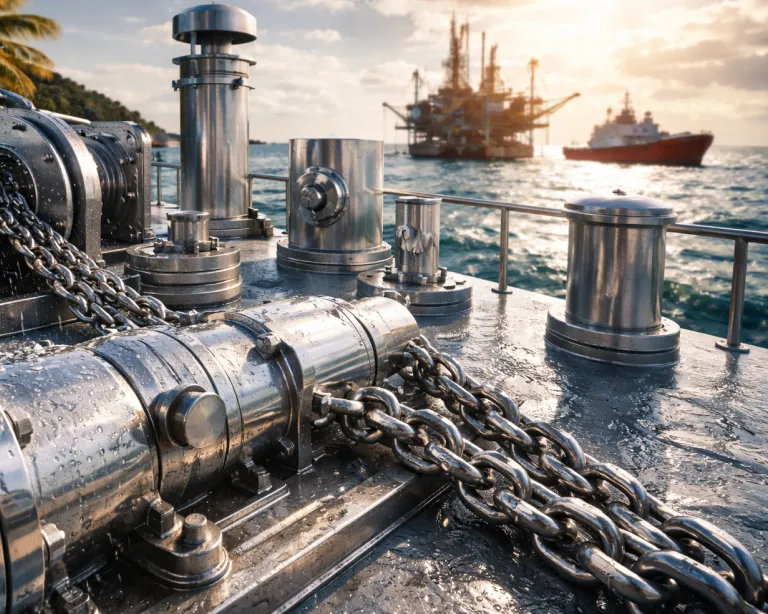
Steel and saltwater are natural enemies. Throw in the 45°C heat typical of regions like Dubai, and you have a recipe for rapid structural failure. If you are managing marine assets, you aren’t just looking for paint; you need specialized metal coating services that act as a permanent shield. Choosing between hot-dip galvanizing and epoxy coatings determines whether your steel lasts decades or degrades in months.
Which Metal Coating Services Handle 45°C Marine Environments Best?
Hot-dip galvanizing is generally the superior choice for raw durability in extreme heat and high salinity. Why? Because it creates a metallurgical bond. The zinc doesn’t just sit on top of the steel; it becomes part of it. At 45°C, the expansion and contraction of metal can cause standard paints to flake. Galvanized steel breathes with the heat.
Seven Seas specializes in these high-stakes environments. When you look at steel metal fabrication services, the choice of finish is as critical as the weld itself. For heavy structural components submerged or sprayed by the sea, the “sacrificial” nature of zinc means even if the surface gets scratched, the surrounding zinc protects the exposed steel.
When Should You Choose Epoxy Coatings Instead?
Epoxy isn’t the underdog; it’s a specialist. While galvanizing is a beast for structural frames, epoxy coatings excel in chemical resistance and aesthetics. If your marine steel is exposed to specific chemicals or requires a high-visibility colour code, epoxy is the answer.
However, epoxy has a weakness: UV radiation. In 45°C heat, the sun is brutal. Standard epoxy can “chalk” and break down under intense sunlight. To combat this, experts often use a “duplex system.” This involves galvanizing the metal first, then layering epoxy on top. It’s the gold standard for metal coating services in the Middle East.
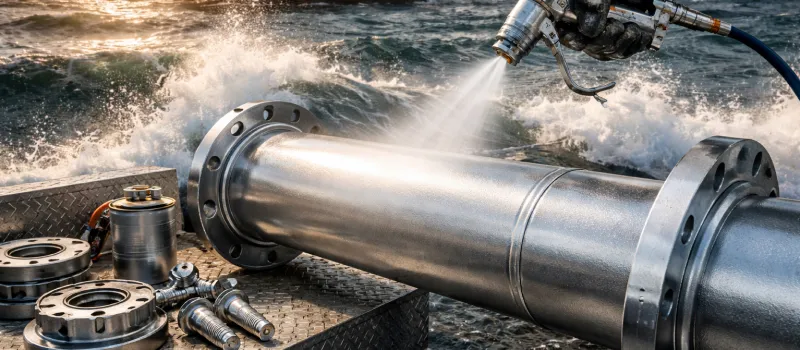
The Impact of 45°C Heat on Bond Strength
Heat accelerates corrosion. Every 10°C increase in temperature can roughly double the corrosion rate in salty air. At 45°C, the moisture in the air is basically a slow-motion acid bath for unprotected steel.
Seven Seas ensures that the fabrication process accounts for these thermal stresses. The American Galvanizers Association suggests that proper surface preparation is 90% of the battle. If the steel isn’t pickled and cleaned perfectly before the dip or the spray, the coating will fail. Period.
Maintenance Reality: Hot-Dip vs. Epoxy
Think about the long game. Hot-dip galvanizing is virtually maintenance-free for 20 to 50 years, even in coastal areas. Epoxy requires inspections every few years to check for chips or bubbles. If a ship or a pier is hard to reach, go with the dip. If it’s an onshore facility where you can easily send a maintenance crew with a brush, epoxy might save you some upfront costs.
Final Thoughts
Is your priority “set it and forget it”, or do you need a specific aesthetic finish? For most marine structural work in extreme heat, hot-dip galvanizing wins on ROI. Ready to shield your next project from the elements? Check out our full range of solutions at Seven Seas or reach out for a technical consultation. What’s your biggest struggle with rust right now?
FAQ
Does hot-dip galvanizing peel off in high heat?
Nope. Unlike paint, it’s chemically bonded to the steel. It handles 45°C without breaking a sweat. It actually stays stable up to about 200°C.
Can I use epoxy on a boat hull?
Yes, but don't fly solo. You need a marine-grade epoxy specifically designed for submersion. Also, if it’s above the waterline, you’ll need a UV-resistant topcoat so the sun doesn't turn it into powder.
Is galvanizing more expensive than epoxy?
Initially, often yes. The process is more intensive. But if you look at the cost over 20 years, galvanizing is usually cheaper because you aren't repainting it every five years.
What happens if the coating gets scratched?
With galvanizing, the zinc "sacrifices" itself to protect the gap. With epoxy, a scratch is an open door. Rust will get under the film and start peeling it back like an orange.