Concrete Pump Blockage: Causes and How to Prevent Them
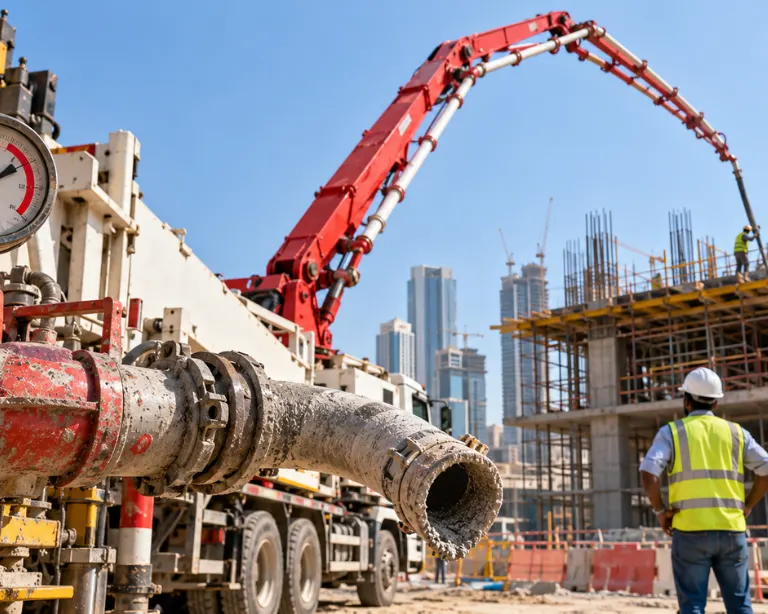
Watch the pressure gauge on a concrete pump long enough and you will learn its warning sign. Pressure climbs, the hose end stays dry, and the pour stalls. That is a concrete pump blockage, where concrete fails to emerge at the end of the pipeline. Downtime on a pour costs money and patience, and most stoppages leave clues well before the line goes quiet. This guide walks through those clues, the usual causes, and a prevention routine a site team can actually follow.
Why Does Concrete Pump Maintenance Start at the Gauge?
The gauge is the first instrument to show trouble. A rising reading while nothing reaches the end of the line points to a blocked pipeline. Operators who note the normal working pressure of each pump can spot drift early, long before a full stoppage.
Concrete pump maintenance exists for that reason. Regular checks and servicing keep the equipment in condition, and concrete pump repair deals with whatever those checks turn up. The aim is to head off an unexpected breakdown, not to react to one. Detailed inspection fits here as well, because looking over every component early is how small problems get caught before they grow. Servicing happens on your schedule. A breakdown happens on the pumps.
Mix Behavior and Concrete Pump Blockage
Pipeline blockage, segregation and bleeding are the major problems met when pumping concrete. The last two belong to the mix itself. Segregation is the separation of a batch into its parts. Bleeding is water rising out of the mix.
Neither shows up on a pump’s service record, which is why they get missed. A batch that behaves inconsistently is a poor match for a long pipeline, so a quick look before pumping starts is worth the minute it takes. If a load looks separated or wet at the surface, raise it with the batching side before the gauge does it for you. Mix checks and gauge checks work best as a pair.
Worn Parts and Small Faults Left Alone
Old equipment turns minor wear into major trouble. Machine rebuilding replaces or repairs worn components, which can be a cost-effective route compared with buying new and can extend the life of existing equipment. Detailed inspection examines every component for wear or repairs that are due. Regular maintenance, meaning checking and servicing the equipment, also makes malfunctions less likely and supports a longer working life.
Electronics belong on the checklist too. Technicians handling concrete pump truck service deal with a range of faults, including electronic repair, and work with diagnostic tools and quality parts. A control fault can stop a pour just as a worn part can.
A Prevention Routine That Fits a Working Site
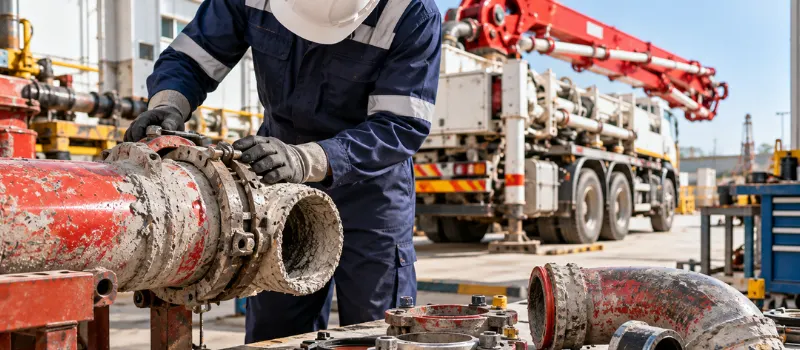
Preventing concrete pump blockage rarely needs anything exotic. It needs a few habits applied every time.
- Gauge reading logged at the start of every pour, then compared with the last one.
- A quick look at each batch for separation or surface water before pumping begins.
- Servicing booked ahead, not after a fault appears.
- Inspection before and after any repair, thorough cleaning, and any issue found cleared.
- Genuine, quality spare parts whenever a worn component is replaced.
That pattern of scheduling, inspection, cleaning, issue clearing and genuine parts mirrors a routine used in marine maintenance, and the same thinking applies to site machinery. Keep a simple log so patterns show up over weeks, not just on the day a line fails.
When to Bring in a Technician
A pressure rise that keeps returning, repeated stoppages, or electronic warnings call for a qualified technician with diagnostic tools. Clearing a blocked line is not a job for guesswork, so follow site safety rules for pressurised equipment and leave diagnosis to trained people. Share the gauge log and what the operator saw, since that history helps the technician narrow the cause. Urgent faults that risk downtime or safety hazards are the ones to report quickly rather than leave for the next shift.
Final Thoughts
A blocked line rarely arrives without notice. The gauge, the mix, worn components and electronics all give signs, and a steady maintenance habit makes them easier to read. None of it needs a special tool to begin, only the habit of looking early. Seven Seas Machinery services concrete pumps across Dubai, Abu Dhabi, and Sharjah. What would your crew spot first if the gauge started drifting tomorrow?
FAQ
What actually causes a concrete pump to block up?
Usually the mix, through segregation and bleeding, or worn parts nobody caught. A rising gauge reading while nothing reaches the pipeline end is the classic sign.
How do I know my line is blocked?
Watch the gauge. If pressure keeps climbing and no concrete comes out at the end of the pipeline, treat it as a blockage and call a qualified technician.
Does regular servicing really cut down stoppages?
Servicing checks the equipment so small faults get fixed before they grow, which lowers the chance of unexpected breakdowns. No routine removes the risk entirely, though.
Can electronics cause trouble on a pump truck?
Sometimes. Concrete pump trucks can develop electronic faults that need their own repair, separate from mechanical wear, so warnings on the controls deserve a technician's attention.