Hydraulic Hose Failure: 6 Signs and When to Replace

A winch on a barge, a deck crane on an offshore support vessel, and a steering gear unit: each one depends on hoses that rarely get a second look until something goes wrong. Hydraulic hose failure seldom arrives without warning, though, and the warnings are usually things a technician can see, hear or feel. This guide walks through six of them, what tends to sit behind each, and why replacement timing has no single answer.
Six Signals Worth Stopping a Shift For
None of these proves a hose is finished. Read together with the machine’s history, they show where to look first in the hydraulic system.
Fluid Where It Should Not Be
A hydraulic hose leak is the obvious signal. Wet fittings and an oily film along a tube run or drips under a parked machine all count. Small leaks and minor damage can sometimes be repaired, while a damaged length is replaced.
Wear Along the Run
Check the whole length, not only the ends. Rubbing, wear and surface damage on hoses and tubes shorten their working life, and the repair-or-replace call depends on how far the damage goes.
A Different Sound
Machines have a normal sound. When it changes, something in the circuit has changed too, even if the hose looks fine from outside.
Heat that Keeps Climbing
Rising operating temperature can come from the fluid itself, a clogged filter or the wrong fluid in the circuit. A hot hose is a prompt to look upstream. Check the filter and the oil before blaming the hose.
Slow or Jerky Movement
A cylinder that creeps, a winch that hesitates, a ramp that lifts unevenly. Sluggish or erratic motion points to a pressure or flow problem somewhere, and service records help separate a hose fault from a pump or control valve fault.
Pressure that Will Not Hold
Pressure faults round out the list. When a system cannot reach or keep its working pressure, a hose, seal, pump or valve may be responsible, and each has to be checked in turn.
When the Oil Is Part of the Problem
Several signs above point back to the fluid rather than the hose. Particles in the oil, water that has found its way in, clogged filters, high fluid temperature and the wrong fluid grade are the usual reasons for poor performance. Fluid problems can sit alongside hydraulic hose failure, so a filter and fluid check belongs in any diagnosis.
Oil flushing clears contaminants out of pipes and hoses before they do more damage. Flushing after a hose change keeps a new length from inheriting the old problem. Fluids should not be mixed casually either, so confirm the grade the system calls for before topping up.
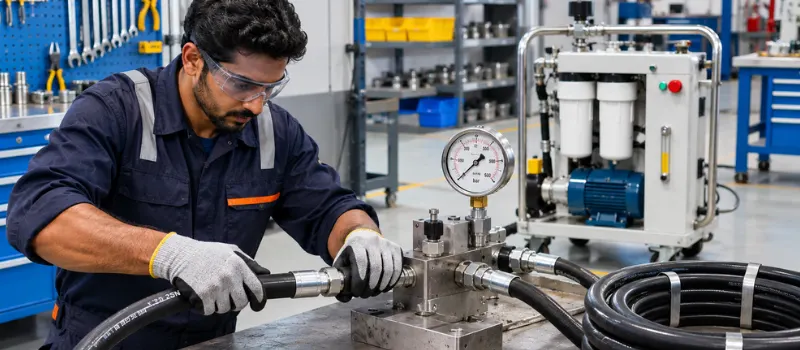
Why Hydraulic Hose Failure Rarely Follows a Calendar
Everyone wants a number of months or years. A fixed figure is tidy, but hoses on a winch, a barge jacking system, a steering gear unit and a cargo valve line work under very different loads, so one interval cannot fit them all. The equipment maker’s schedule sets the baseline, and inspection findings adjust it.
What works better is a routine: scheduled maintenance, a detailed inspection before and after any hydraulic and pneumatic repair, cleaning, clearing whatever the inspection turns up, and genuine spare parts. Hose replacement then follows the findings rather than the date. Records matter here. A hose repaired twice in one season tells a different story from one that has run quietly for years. When a length does go, a new one can be fabricated to the machine’s specification instead of forcing a near match into the run. A simple repair can take a few hours, and a complex fault a few days, so plan downtime around the diagnosis, and read up on hydraulic cylinder repair versus replacement if a cylinder is involved.
A Safety Note Before You Hunt for a Leak
Hydraulic systems hold fluid under high pressure, and even a pinprick leak can drive fluid beneath the skin. Never run a hand or finger along a hose to find one. Depressurise first, then trace a suspect line with a piece of card held at arm’s length. Anyone hit by a fine jet of oil needs urgent medical attention, and the clinician should be told hydraulic fluid is involved. This article is general information. Procedures for a specific machine belong with a qualified technician and the equipment manual.
Final Thoughts
Machines announce trouble in small ways long before a hose lets go: a damp fitting, an unfamiliar noise, and a temperature reading that drifts. Write those down with the date and the duty the machine was under, and replacement decisions get easier. Seven Seas Machinery, a Dubai repair company operating since 2004, handles hydraulic hose and tube repair alongside cylinders, pumps and control valves across Dubai, Sharjah and Abu Dhabi. Which of these six signs has your team logged in the past month?
FAQ
How do I know if my hydraulic hose is about to go?
Watch for wet fittings, rubbed or damaged sections, a new noise, rising temperature, sluggish movement and pressure that will not hold. One sign alone is not proof, but two together deserve a proper inspection before the next shift, not after the next failure.
Can a leaking hose be repaired, or does it have to be replaced?
Sometimes a repair is enough. Minor leaks and small areas of damage can be fixed, but badly worn or damaged lengths get replaced. A technician can tell which applies after checking the full run, not only the spot that is dripping.
How long does a hose repair take?
That depends on the damage. A simple repair might be done in a few hours, while a complex fault can run to a few days. Location and system requirements also play a part, so ask for an estimate after inspection.
What makes a hydraulic system run hot?
Common culprits are contaminated oil, clogged filters, high fluid temperature and the wrong fluid. Heat is a symptom, so the fix starts with finding which of those is involved rather than just cooling the machine down. Check the filter and the oil first.
Is it safe to feel along a hose for a leak?
No. A pinhole leak under pressure can push fluid through skin, even when the spray is too fine to see. Depressurise first, keep your hands clear and use a piece of cardboard to trace a suspect line. If fluid gets under the skin, seek urgent medical care.