Generator Not Starting: 8 Common Causes and Fixes
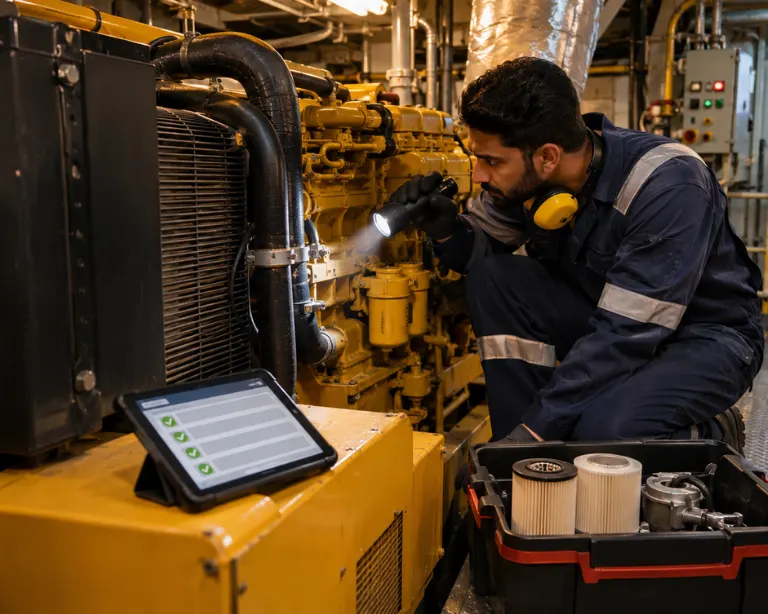
You press the start button, and nothing turns over. A generator not starting rarely means the whole unit has failed. Usually one part, one setting or one skipped service sits behind it. This guide covers eight causes in the order worth checking, marks the checks an owner can do safely, and flags the faults that belong with a qualified technician.
Short answer: check the fuel level first, then the spark plug connections if your model has them. If the unit still won’t start, the fault is probably mechanical or electrical and needs a technician to diagnose it.
Generator Not Starting: Start With Fuel and Spark
Generator troubleshooting begins with the dull checks, and owners tend to skip them in favor of imagining the worst. Do these two first, with the unit switched off.
1. Low Fuel Level
An empty or nearly empty tank is the simplest explanation, and it catches small and portable units alike. Look at the tank before touching anything else, then refuel the way the manufacturer’s manual describes.
2. Loose Spark Plug Connections
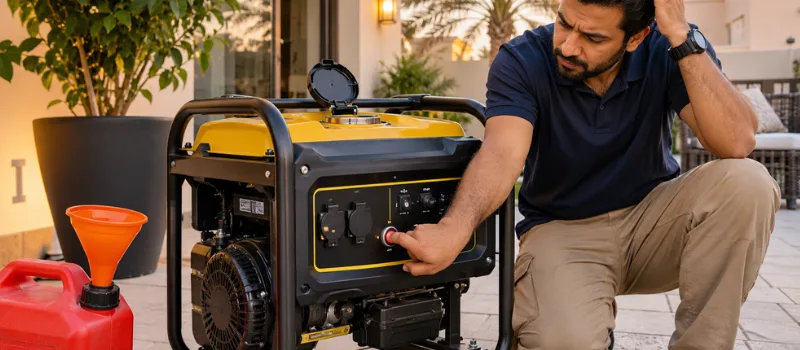
If your model uses spark plugs, confirm each connection is firm. A loose one can break the spark the engine needs to fire. If a plug looks damaged or the unit still stays silent, stop there.
Faults Inside the Control Panel and Fuel System
3. Control Panel Faults
The control panel starts, stops, and manages the generator’s power. When it fails, the unit may not respond when you need it most. A technician will inspect the panel, repair or replace faulty parts, and test the whole setup.
4. Fuel Injector Problems in Diesel Units
The fuel injector delivers fuel to a diesel engine at the right moment. A faulty one can make the generator run rough, shake, lose power, or burn more fuel than it should. Notice any of that before a failed start and mention it to the technician.
Heat, Motor, Engine, and Servicing Problems
5. Cooling System and Radiator Problems
The radiator and cooling system keep the engine from overheating. A service team checks, cleans, and repairs the whole system, which helps prevent breakdowns further down the line.
6. Generator Motor Faults
The generator motor produces the electricity itself. Wear, electrical faults, and mechanical faults can all stop it, and a stopped motor means no power. Checking, fixing, or rebuilding a motor is workshop work, not a driveway job.
7. Engine Faults and Worn Parts
The engine does the heavy lifting in any generator. If it has a fault, nothing else matters, because the unit simply won’t run. Parts wear out with use, and a technician has to find the actual fault before swapping anything. Guessing only burns time.
8. Missed Generator Maintenance
This one hides in plain sight. A service visit means someone looks the unit over, cleans it, lubricates it, tests the components, and replaces whatever has worn down. How often depends on how much the generator runs and what type it is. A common suggestion is every six months, though your manual has the final word. Skip a few visits, and small faults get a chance to grow into a breakdown.
Does the Type of Generator Change Anything?
These eight causes cover the usual suspects across diesel, commercial, and portable units. Marine generators bring their own demands, at sea or in port, so vessel operators should look for a technician experienced in marine generator repair.
When to Stop and Call a Technician
A generator not starting can tempt anyone to begin unscrewing panels. Don’t. Fuel level and spark plug connections are the only checks here suited to owners. Control panels, injectors, cooling systems, motors, and engines carry electrical and mechanical risk, so leave them to a qualified technician and follow the safety notes in your manual. This article is general information and cannot replace an inspection of your own unit. Curious what a repair might involve cost-wise?
What a Technician Does After You Call
Expect an in-depth assessment before any parts change. The technician inspects, cleans, lubricates, and tests the components, troubleshoots the fault, and then replaces what has worn out. Genuine spare parts matter for the repair to last, on land and at sea alike. Ask what was found and what was replaced, so you have a record for the next service.
Final Thoughts
The pattern across all eight is simple: easy checks first, specialist diagnosis second. Fuel and spark plug connections cost nothing to inspect, while everything from control panels to engines deserves a trained eye. Seven Seas Machinery repairs diesel, commercial, portable, and marine generators across Dubai, Sharjah, and Abu Dhabi. Which of these eight signs sounds most like your unit right now?
FAQ
Why won't my generator start?
Usually it's something simple, like low fuel or a loose spark plug connection. If both check out, the cause is probably mechanical or electrical, such as the control panel, fuel injector, motor, or engine. That's when you want a technician looking at it.
What should I check first on a generator that won't start?
Fuel level, then the spark plug connections if your model has them. Do both with the unit off. Anything past that, like panels or engine parts, is better left to a professional who can diagnose it safely.
How often should a generator be serviced?
Depends on how hard it works and what type it is. A professional service every six months is a common rule of thumb, unless the manufacturer's manual says otherwise. Follow the manual first.
How do I know if my diesel generator has an injector problem?
Injector faults tend to show up as rough running, shaking, lost power, or higher fuel use. Spot any of those and get an inspection, because the injector times the fuel going into the engine.