Steel Fabrication Drawings: How to Read and Check Them
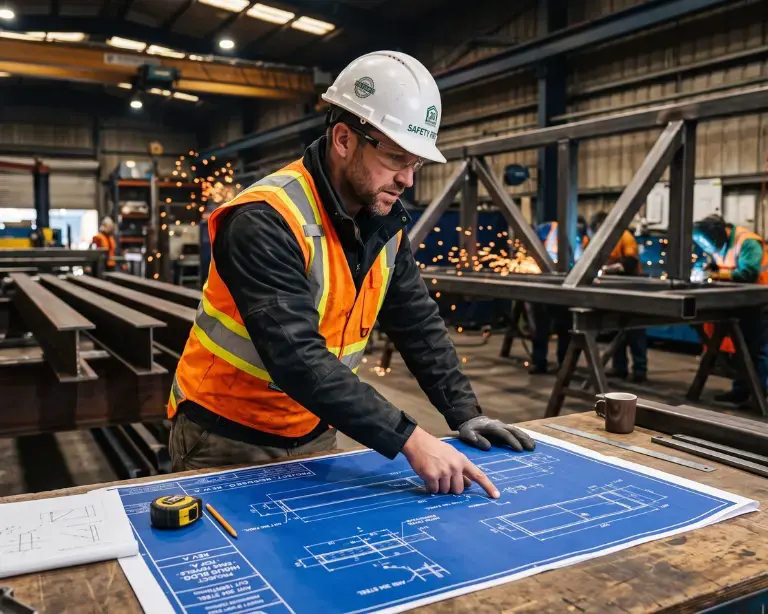
A beam cut a few millimetres short cannot be stretched back to length. That is the quiet cost of a drawing nobody checked properly. Steel fabrication drawings hold every decision about cutting, bending, welding and finishing, so the desk is the cheapest place to catch a mistake.
This guide is written for project managers, site engineers and procurement staff who receive drawing sets and need to review them before work reaches the shop. It is general education only. Approval of any structural or load-bearing detail belongs to a qualified engineer.
What Does a Drawing Set Tell the Fabricator?
Fabrication means cutting, bending, shaping and assembling steel into custom structures, parts or products. The drawings turn a design into instructions for each of those steps.
The type of work changes what you look for. Structural steel fabrication produces beams, columns, trusses and frames, so member sizes and connection details carry most of the sheet. Sheet metal fabrication shapes thin sheets through cutting, bending, punching and welding, and it turns up in HVAC systems, enclosures, cabinets and automotive parts. There, bend lines and flat dimensions matter more.
Machined components are different again. A custom part, sometimes one that can no longer be bought off the shelf, has no sample to copy, so the drawing is the only reference the machinist has.
How to Read Steel Fabrication Drawings Without Guessing
Start with the title block. Project name, drawing number, revision letter, date and approval status all sit there, and the revision is the detail that causes arguments later. If two revisions are circulating, stop until someone confirms which one governs.
Next, check scale and units. Then read the views together instead of one at a time, because a plan, an elevation and a section describe the same piece from different sides and should agree. Notes come last but deserve a slow read. They often hold the finish, the material grade and special instructions that drawn lines cannot show.
Material callouts need a second look. Low-carbon steel is the most common type used in metal fabrication and carries up to 0.3 percent carbon, which gives a useful balance of tensile strength and ductility, meaning the ability to deform without cracking. Whatever the grade of the drawing names, confirm the stock being ordered matches it.
Weld symbols deserve the same care. Welding and joining fuses parts using heat or pressure, and the symbol tells the welder which joints to fuses and how.
Check the Drawings in Production Order
Treat steel fabrication drawings as a route map that follows the shop’s own sequence: planning, design and engineering, cutting, bending and forming, welding and assembling, then finishing. Reviewing in that order keeps the checks tidy.
Planning and design
Confirm the scope matches the original brief. Look for a stamp or sign-off from the responsible engineer on anything that carries load. If it is missing, ask for it.
Cutting, bending and forming
Add up the individual dimensions and compare them with the overall length. They should agree. Check that every bend has an angle and a clear reference edge and that hole positions are dimensioned from the same datum.
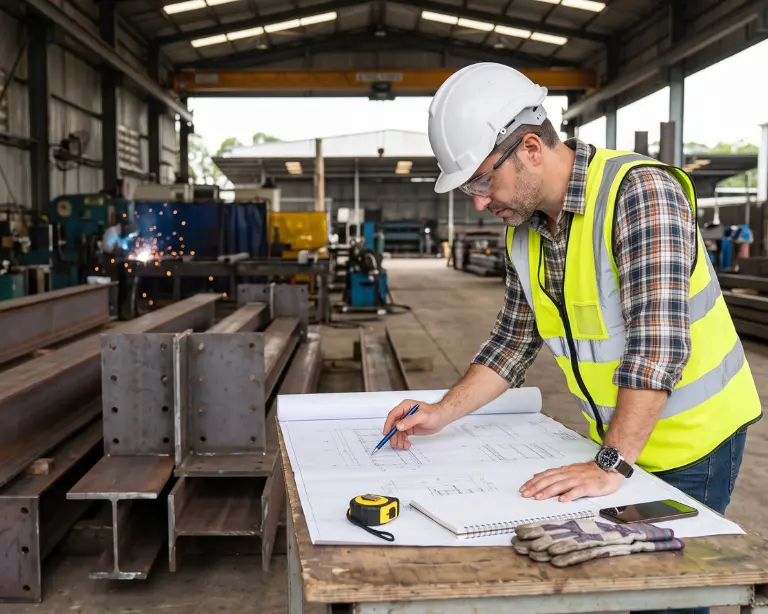
Welding, assembly and finish
Every joint needs a symbol or a note. Think about access too. A weld the drawing demands but a welder cannot physically reach is a design problem, and it is far cheaper to spot on paper. Then find the finishing instruction, whether paint, coating or bare steel, and check it says the same thing everywhere it appears.
Red Flags Worth a Written Query
Some problems announce themselves:
- Dimensions that do not add up to the overall figure
- No material grade anywhere on the sheet
- A note that contradicts what the view shows
- A joint with no weld information
- Two revisions of one sheet sitting in the same folder
Raise each one as a written query, not a phone call. Ask for an updated drawing with a new revision letter and keep the old one on file. A verbal fix leaves the next person guessing, and the shop floor will follow whichever version happens to be on the bench.
Final Thoughts
A good drawing review is mostly patience. Read the title block, match the views, confirm the material, trace every weld and add up the dimensions. None of it needs special software; only the habit of doing it before steel is cut does. For anything structural, treat your review as a first pass and let the engineer make the final call.
This guide is shared as general education by Seven Seas Machinery, a Dubai company whose services include steel and metal fabrication.
FAQ
How do I know which revision of a drawing is the right one?
Look at the revision letter and date in the title block, then ask whoever issued the set to confirm in writing. If two versions are floating around, pause work until someone signs off on one.
What should I check first on a drawing?
Title block. Name, number, revision and approval status tell you whether you are even holding the right sheet. After that, match the views against each other.
Can I approve structural details myself?
Not unless you are a qualified engineer. A review helps you catch gaps and mismatches, but anything load-bearing needs sign-off from someone with the right credentials.
Why do weld symbols matter so much?
They tell the welder which joints to fuse and how. A joint without one leaves a decision to guesswork, and guesswork on a structural connection is a risk nobody wants.
What is the quickest way to spot a dimension error?
Add up the small dimensions along a line and compare the total with the overall figure. If they disagree, raise a written query before anything gets cut.