Hydraulic Cylinder Repair vs Replacement: How to Decide
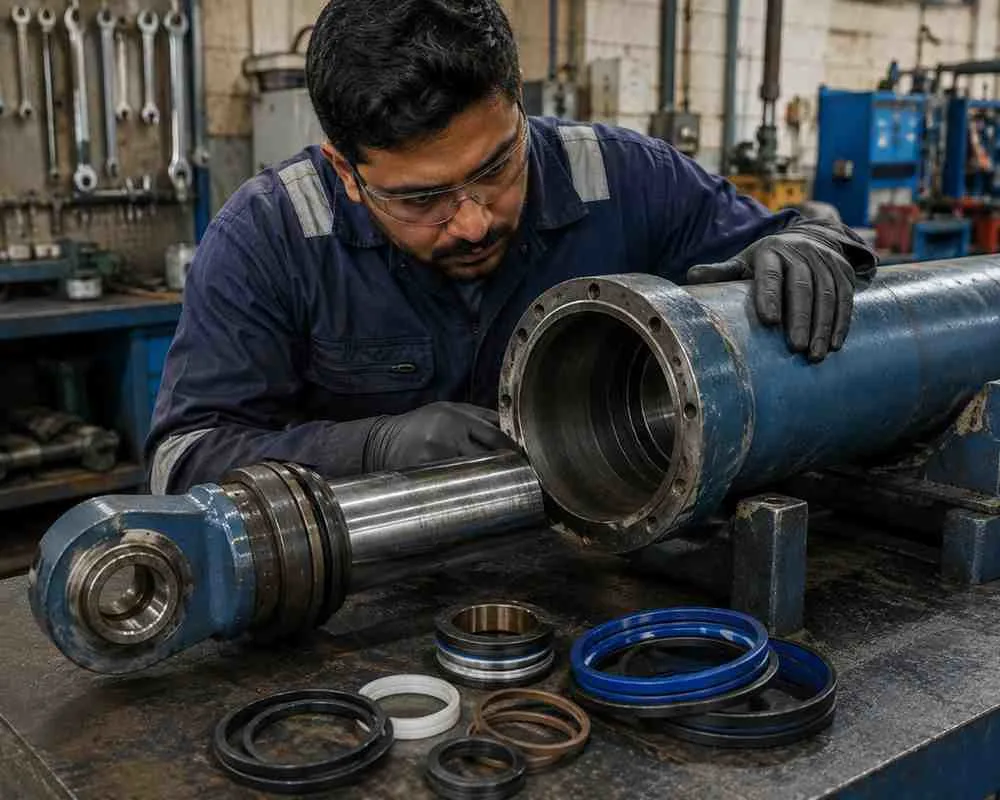
A cylinder that’s leaking oil at the rod seal doesn’t automatically need to be scrapped. That’s the assumption a lot of maintenance teams make, and it’s often wrong. Hydraulic cylinder repair can restore a unit to full working pressure for a fraction of what a new cylinder costs, but only if the damage hasn’t gone past the point of no return. Knowing which side of that line you’re on is the whole game.
Hydraulic systems show up everywhere heavy work gets done; plastics manufacturing, aluminum processing, construction lifts, and marine deck equipment. They rely on pumps, valves, hoses, and cylinders working as one unit, and wear on any single part throws off the rest. A cylinder that’s been in service for years will eventually need attention. The question is whether that attention should be a repair or a full swap.
Hydraulic Cylinder Replacement: When Repair No Longer Pays Off
Replacement earns its place when the barrel itself is compromised. A scored bore, a bent rod, or corrosion that’s eaten into the cylinder wall changes the math. At that point you’re not fixing a seal; you’re trying to restore structural integrity to a component that was never designed to be rebuilt from that state. Pushing a repair onto damage this severe usually means the fix fails again within weeks, and the second breakdown costs more in downtime than the first one would have if you’d replaced it outright.
Age matters too, though not on its own. A fifteen-year-old cylinder with a fresh bore and no rod damage can still be a strong repair candidate. A three-year-old cylinder that’s been run past its rated pressure repeatedly might already be a replacement case. Wear patterns tell the real story, not the calendar.
Signs a Hydraulic Cylinder Repair Can Still Save the Unit
Most of what actually fails in a hydraulic cylinder isn’t the cylinder body at all. It’s the seals. Rod seals, piston seals, and wiper seals degrade from heat, contamination, and simple time in service, and when they go, you get external leaks, internal bypass, or a cylinder that drifts under load instead of holding position. None of that requires a new cylinder. Hydraulic cylinder repair at this stage usually means disassembly, seal replacement, honing the bore if there’s light scoring, and reassembly with pressure testing before the unit goes back into service.
Minor pipe and hose damage falls into the same category. A cracked fitting or a worn hose section can look alarming when fluid is sprayed out under pressure, but these are contained, fixable problems. Seven Seas Machinery handles this kind of work directly, including hydraulic seal and pipe repair services that cover jacks, control valves, pumps, and cylinders across construction, marine, and industrial equipment in the UAE.
What a Proper Diagnosis Actually Involves
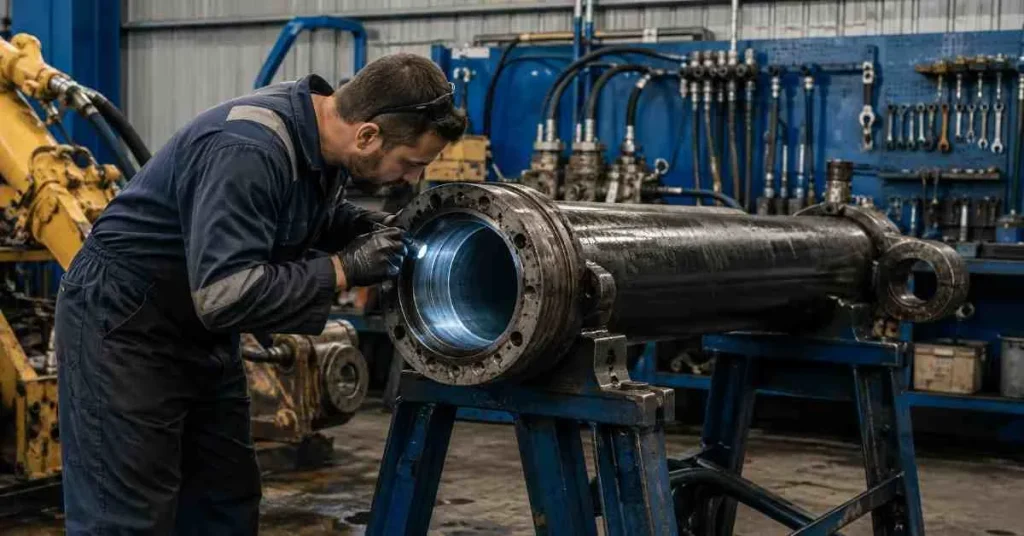
The decision between repair and replacement shouldn’t be a guess, and it shouldn’t be made by the person who noticed the leak. It needs a technician who can pull the cylinder, inspect the bore surface under proper light, measure rod straightness, and check for internal bypass through a pressure test. A failure analysis report, done properly, tells you exactly what’s worn and what’s still sound.
Skipping this step is where most bad repair-or-replace decisions come from. A technician who repairs based on a visual glance alone might miss a hairline crack in the barrel that shows up as a catastrophic failure two months later. A technician who recommends replacement without checking bore condition first might be steering you toward an unnecessary cost. The diagnosis is the part that actually protects your equipment and your budget, not the repair itself.
Weighing Cost, Downtime, and Long-Term Reliability
Cost comparisons only mean something once you know what’s actually wrong. A seal kit and a day of labor are not in the same category as a new cylinder barrel, a machined rod, and reassembly. But if a repaired cylinder is going to fail again in six months because the underlying wear wasn’t addressed, the cheaper option becomes the more expensive one.
Downtime carries its own weight here. Some facilities can tolerate a two-day repair window. Others, particularly marine operations working on tight port schedules, can’t afford the wait and need a swap-and-go replacement even when repair would technically have worked. There’s no single right answer. There’s only the right answer for the specific cylinder, the specific damage, and the specific operation depending on it.
Final Thoughts
The bore tells you more than the leak does. Before deciding between hydraulic cylinder repair and replacement, get an actual inspection of the cylinder internals rather than reacting to the symptom on the outside. What does your current maintenance routine look like for catching cylinder wear before it becomes a shutdown?
FAQ
How do I know if my hydraulic cylinder needs repair or a full replacement?
Check the bore first. Surface scoring, pitting, or a bent rod usually means replacement makes more sense long-term. If the barrel is clean and the problem is just a worn seal or a minor leak, repair is often the smarter, faster call.
Can a leaking hydraulic cylinder still be repaired?
Yes, in most cases. External leaks around the rod seal are one of the most common and most repairable issues in hydraulic systems. Unless the leak has led to internal corrosion or rod damage, a seal replacement usually resolves it.
Is it cheaper to repair a hydraulic cylinder than replace it?
Generally, yes, provided the barrel and rod are in reasonable shape. A seal kit and labor cost far less than a new cylinder. That advantage disappears fast if repeated repairs are needed because the root wear issue was never properly diagnosed.
What causes hydraulic cylinders to fail in the first place?
Contamination in the fluid, worn seals, incorrect fluid type, and running the system past its rated pressure are the usual culprits. Heat buildup from any of these accelerates wear on everything downstream, including pumps and valves.
How long does a hydraulic cylinder repair usually take?
Simple seal and hose repairs can be done within a day. More involved work, like bore honing or rod straightening, takes longer depending on parts availability and the extent of the damage found during inspection.