Forklift Damage Prevention: A Warehouse Manager’s Guide
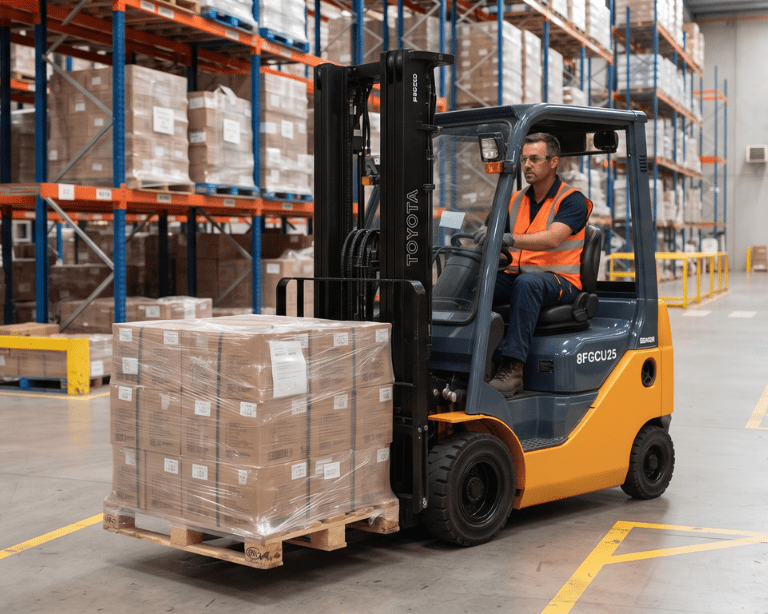
A cracked mast plate or a bent fork tine almost never comes from one dramatic accident. Forklift damage prevention in most warehouses is a matter of habit, not luck. The equipment wears down through dozens of small collisions, overloads, and rushed turns that pile up over months until something finally gives out on a shift nobody remembers as unusual. Managers who actually read their incident logs tend to find the same five or six causes repeating on the same aisles, sometimes the same forklift, month after month.
Where Does the Forklift Damage Prevention Start on the Floor?
Rack and shelving collisions account for a disproportionate share of warehouse forklift safety incidents, and the pattern is almost always identical. An operator misjudges the width of an aisle, and clips an upright, and the rack looks fine until an inspection months later finds it carrying a fraction of its rated load. Overloading works the same way in reverse. A forklift rated for two tonnes that regularly carries two and a half doesn’t fail on the first trip. Tyres wear unevenly, the mast strains under weight it wasn’t built for, and hydraulic seals give out sooner than the maintenance schedule expects.
Driving Habits That Wear Machines Down Early
Incorrect fork positioning causes damage quietly, without ever producing an obvious incident report. Forks set too wide or too narrow for a pallet shift the load’s centre of gravity, and repeated shifting stresses the carriage over time. Poor pallet handling compounds the problem. A pallet lifted off-centre, or dragged instead of lifted cleanly, puts uneven pressure on the forks and can crack pallet boards, which then damages the goods on the very next lift.
Speed and braking matter just as much, maybe more. A forklift moving too fast through a warehouse aisle needs a harder stop, and hard stops shift loads, strain brake components, and accelerate tyre wear. Sharp turns taken at speed put similar stress on the mast and steering axle. None of this shows up as a single breakdown. It shows up gradually, as a maintenance bill that keeps climbing for reasons nobody can quite point to.
Surfaces, Loading, and Layout Problems That Add Up
Not every warehouse floor suits the forklifts running on it. Cracked concrete, rough transitions between indoor and outdoor surfaces, or gravel yards used for outdoor storage all put extra strain on tyres and suspension components that a smooth, sealed floor would not. Improper loading and unloading adds another layer of wear. A load lifted before the forks are fully under the pallet, or lowered too fast onto a trailer bed, sends shock straight into the mast and hydraulic system.
Traffic layout is easy to overlook because it’s a design problem rather than an operator mistake. Warehouses with blind corners, narrow crossing points, or pedestrian paths that intersect forklift routes see more near misses and more low-speed collisions, the kind that dents a mast or bends a fork tine without anyone ever filing a report.
Training Gaps Behind Most Repeat Incidents
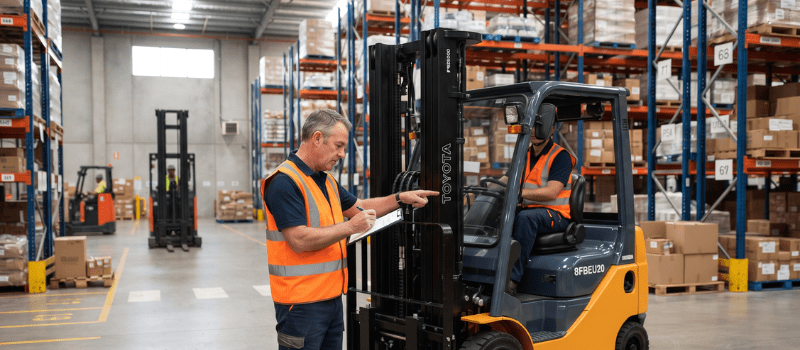
Inadequate operator training sits underneath most of the causes listed above. A well-trained operator adjusts speed for the aisle, positions forks correctly before lifting, and reads a blind corner almost without thinking about it. The OSHA Powered Industrial Trucks standard, one of the most frequently cited workplace safety standards, sets out requirements for evaluating operators on a recurring basis rather than certifying them once and assuming the skill holds. Facilities that treat training as a single certification, rather than a periodic check, tend to see the same damage patterns resurface with every new hire.
Good habits reduce how often damage happens, but they don’t eliminate the need for inspection. When wear does show up, whether it’s a hydraulic leak, a worn tyre, or a fork that’s taken one too many knocks, catching it early through a proper forklift repair service keeps a small issue from turning into a full transmission overhaul or an unplanned week off the floor.
Final Thoughts
Forklift damage prevention rarely comes down to one fix. It’s the accumulation of aisle width, load limits, operator habits, floor condition, and training frequency, reviewed together instead of one at a time after something breaks. Warehouse managers who go through incident logs quarterly, rather than only after a major failure, usually spot the pattern before it turns expensive. Facilities across Dubai, Sharjah, and Abu Dhabi that work with Seven Seas Machinery on their wider equipment upkeep tend to catch these patterns through routine service records rather than after a breakdown. What does your last quarter of maintenance records actually say about where the damage is coming from?
FAQ
Why do forklifts get damaged even when operators seem careful?
Most damage builds up from small, repeated stress rather than one mistake. A slightly wide turn or a slightly overloaded pallet doesn't break anything on its own, but it wears down the mast, tyres, and hydraulic seals faster than the maintenance schedule accounts for.
How often should warehouse racking be checked for forklift damage?
Racking should get a visual check after any known contact and a formal inspection at least once a year. A rack that looks fine after a light clip can still be carrying far less than its rated load, which only shows up under a proper structural review.
Can overloading a forklift cause long-term damage even if nothing breaks right away?
Overloading rarely snaps something on the spot. A two-tonne forklift hauling two and a half tonnes for a few weeks won't fail outright, but the mast bows slightly under strain it wasn't rated for, tyres flatten unevenly on one side, and hydraulic seals start leaking months before anyone connects it back to the load charts. By the time it shows up on a repair invoice, the habit that caused it is long forgotten.
What warehouse layout changes actually reduce forklift collisions?
Blind corners near packing stations, not open aisles, are where most low-speed collisions actually happen. Convex mirrors at those crossing points, a painted separation between pedestrian walkways and forklift lanes, and a wider turning radius near racking all cut down the dents nobody bothers reporting. Layout fixes tend to get skipped because nobody owns them the way an operator mistake gets flagged and assigned.
Is annual operator refresher training really necessary if staff already know how to drive a forklift?
Skills fade without reinforcement, and habits like fork positioning or speed control tend to drift over time. Periodic evaluation, not just one-time certification, is what most safety standards actually require and what catches drift before it causes damage.