Industry Insights: Trends Shaping the Future of Marine Machinery
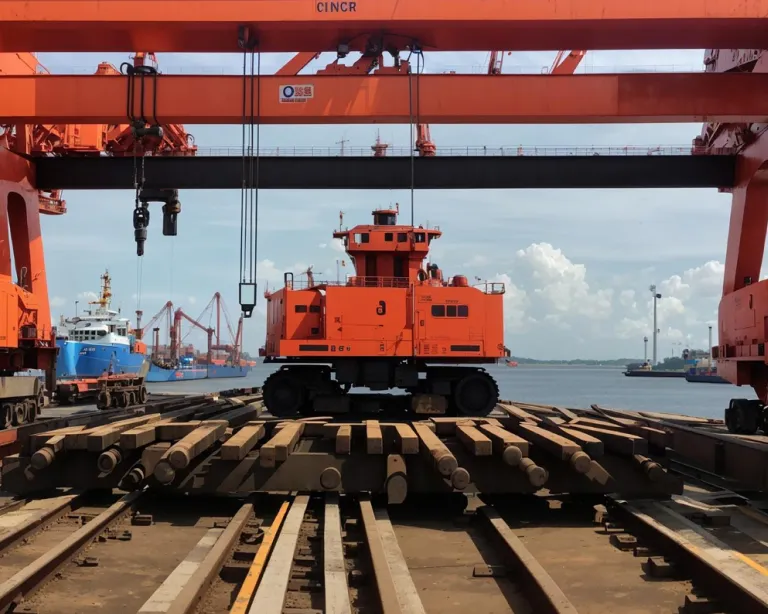
Have you ever taken a moment to think about how rapidly the marine industry is changing today? With constant waves of new innovations, the marine sector is moving into a phase of major transformation. Advanced types of engines that offer greater safety and efficiency, along with modern automation systems, are reshaping the very way vessels operate. Understanding these developments is crucial for companies, engineers, and operators who want to stay ahead in a competitive industry.
Table of Contents
- The Importance of Marine Machinery Trends
- Gaining More Attention for Green and Sustainable Technologies
- Smart Systems: Marine Machinery Automation
- Digitalization: Remote Monitoring, IoT, AI
- Design and Advanced Material Innovation
- Health and Safety, Compliance, and Regulatory Trends
- Maintenance and Predictive Analytics
- Case Studies and Examples in the Industry
- Comparison Table: The Old vs. New Machinery Features
- Future Projections
- FAQ
Introduction: The Importance of Marine Machinery Trends
Marine machinery supports world trade, exploration, and transport. The industry is expanding, and it is important to keep up with new trends in efficiency, sustainability, and technology. Operators and companies should embrace modern machinery to control costs and environmental impacts and enhance the safety of operations.
Key points:
There is increasing global demand for sustainable shipping solutions.
- Increased adoption of intelligent technology in ships.
- Focus on reducing fuel consumption and emissions.
Gaining More Attention for Green and Sustainable Technologies
Sustainability is not an option anymore; it is a necessity. Marine equipment today includes eco-friendly engines, other fuels, and emission control technologies.
Trends:
- Diesel-powered ships are increasingly being upgraded or replaced with LNG-fuelled systems.
- Hybrid propulsion systems that combine electric and conventional engines.
- Lower-carbon and eco-friendly components.
- Waste heat recovery to enhance efficiency.
Example:
Emissions from modern container ships can be reduced by up to 30% with hybrid engines, supported by stricter IMO regulations, and there are stricter IMO regulations.
Smart Systems: Marine Machinery automation
Automation is changing marine operations. Smart systems make processes more accurate and reduce human error, as well as improve efficiency.
Key features:
- Automated engine control system.
- Remote-controlled machinery for hazardous zones.
- Smart navigation and autopilot.
- Onboard performance monitoring in real time.
Example:
Early detection of anomalies in the engine can be done through automated engine monitoring, which ensures that there are no expensive repairs or downtime.
Digitalization: Remote Monitoring, IoT, AI
With the arrival of IoT and AI, the entire approach to maintenance in the marine sector has transformed. Now, sensors constantly monitor engines, propellers, and pumps every moment. The data collected is quickly analyzed by AI, helping ensure that the vessel operates more smoothly, efficiently, and without interruptions.
Benefits:
- Real-time fuel-efficiency analysis.
- Preventive maintenance to prevent failure.
- Remote maintenance and updates on the system.
- Vessel performance simulation using digital twins.
Example:
Through an IoT-enabled bulk carrier equipped with connected pumps, maintenance can be planned ahead of failure, and thousands of dollars in repairs can be saved.
Design and Advanced Material Innovation
Lightweight, stronger, and corrosion-resistant materials are currently used in the construction of marine machinery. Design innovations facilitate a reduction in weight, an increase in durability, and less fuel consumption.
Popular materials:
- High-strength engines and propeller alloys.
- Lightweight machinery composite materials.
- Saltwater-resistant corrosion-protective coatings.
Sample Table: Material Benefits
| Material | Benefit | Application |
| Stainless Steel | Corrosion resistance | Engine parts, pumps |
| Aluminum Alloy | Lightweight, durable | Propeller shafts |
| Composite | Reduced weight, strong | Deck machinery |
Health and Safety, Compliance, and Regulatory Trends
Marine machinery design is highly affected by safety standards and international regulations. The modern machines are required to comply with ISO, IMO, and local maritime requirements.
Key trends:
- Improved firefighting systems.
- Ergonomic designs to reduce operator fatigue.
- Adherence to emission and noise laws.
Example:
In modern hydraulic systems installed in vessels, there are emergency shut-off valves that avoid accidents in case of failure at high pressure.
Maintenance and predictive Analytics
Maintenance approaches are shifting towards predictive maintenance instead of reactive maintenance that utilizes AI and sensor data.
Advantages:
- Extends machinery life
- Reduces unplanned downtime
- Reduces the operational costs.
- Enables proactive servicing.
Example:
The use of AI in monitoring predicts the failure of pumps days before it occurs, so that replacement can be scheduled without interfering with operations.
Case Studies and Examples in the Industry
Case Study 1:
Adopting Hybrid Engines for a Shipping Company.
- Problem: Skyrocketing gas prices and environmental fines.
- Solution: Hybrid LNG-fuelled engines.
- Aim: A quarter reduction in fuel consumption, fulfillment of emission regulations.
Case Study 2:
Case Automation of an Offshore Oil Rig.
- Problem: The threat of man to the hostile offshore world.
- Solution: Remote-controlled machines and sensors.
- Outcome: Reduced number of accidents at the workplace and improved uptime.
Case Study 3:
Digital Twin Implementation.
- Dilemma: Predictive maintenance is a complicated issue.
- Solution: Simulation of engine performance using digital twins.
- Findings: It is possible to detect the problems at their initial stage and enhance the processes.
Comparison Table: The Old vs New Machinery Features
| Feature | Traditional Machinery | Modern Machinery | Benefits |
| Engine Type | Diesel-only | Hybrid / LNG | Decreased emissions, fuel conservation. |
| Control | Manual | Automated | Reduced human error |
| Maintenance | Reactive | Predictive/IoT | Minimized downtime |
| Materials | Standard alloys | High-strength composites | Lighter, corrosion-resistant |
| Safety | Basic | Enhanced safety systems | Reduced accidents |
Future Projections
The future of the machinery in the marine field is green, smart, and connected. Those businesses that use sustainable technologies, use digital solutions, and invest in smart machinery will navigate easily through the changing regulations and the difficulties of operations.
As a business looking to adopt the best solutions to marine machinery that can be both durable, efficient, and innovative, Seven Seas Machinery UAE offers bespoke machines and professional advice to stay competitive in the highly dynamic maritime sector.
FAQ
What are the best sustainable technologies for marine engines?
Using efficient parts, LNG fuel, and hybrid engines to reduce emissions and fuel waste.
What materials should be used in marine machinery?
The composite materials, stainless steel, and alloys of aluminum are tough, light in weight, and non-rusting.
Can digitalization be considered a cost-saving factor for marine operators?
IoT sensors, predictive analytics, and digital twins can be applied in order to reduce downtime and improve efficiency.