MEP Maintenance UAE: What Keeps Systems Running
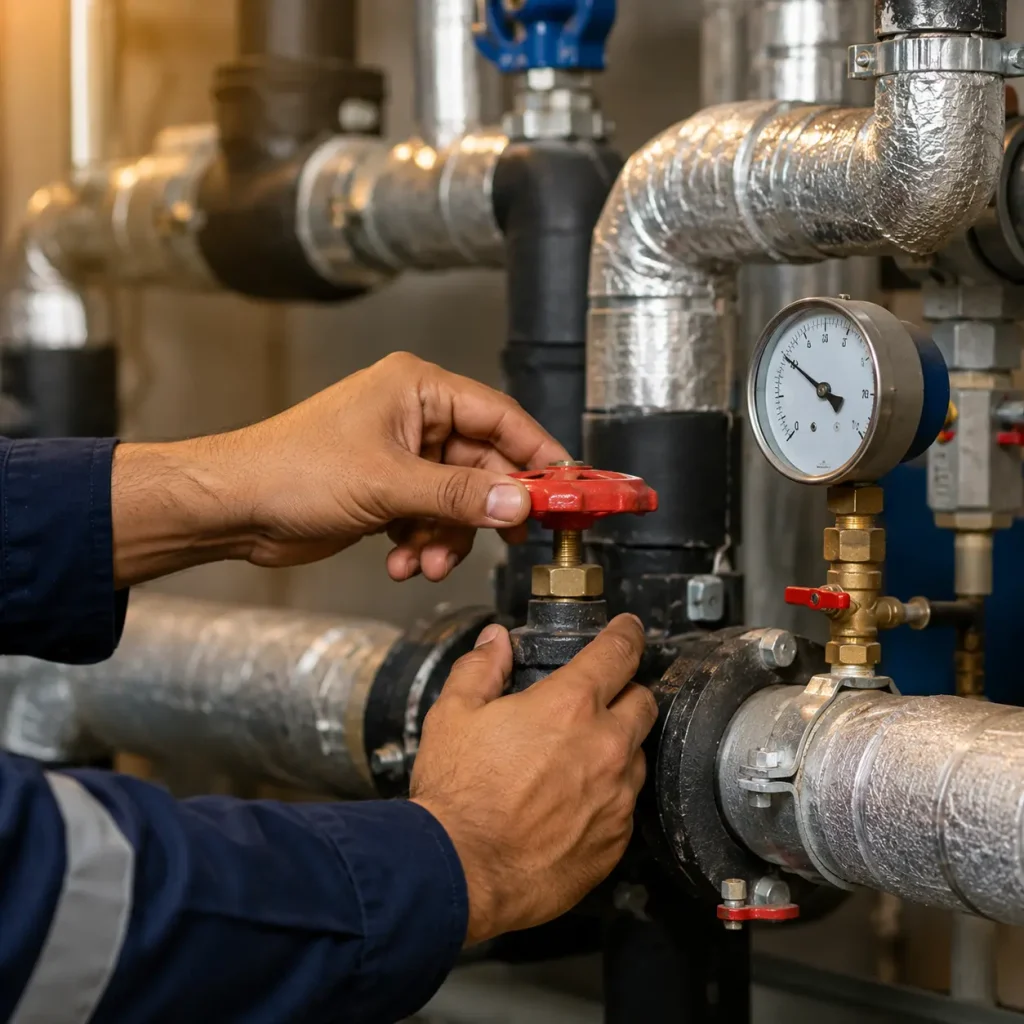
Walking into a commercial tower or industrial plant in Dubai during peak summer, it’s obvious why MEP maintenance UAE facilities depend on isn’t a box-ticking exercise. Chillers run near constantly against outdoor heat that regularly clears 45 degrees. Pumps work harder. Electrical panels carry loads that can double compared to cooler months. Skip a service interval, and the part that fails is usually the one nobody thought to check.
What Does MEP Maintenance UAE Actually Cover?
MEP stands for mechanical, electrical, and plumbing, and each discipline handles a different piece of a building’s working systems. Mechanical covers HVAC, ductwork, and firefighting systems, essentially anything managing temperature and air quality. Electrical covers power distribution, backup power, lighting, fire alarms, and security systems. Plumbing covers water distribution, drainage, sanitary systems, and pump stations that keep water moving where it needs to go.
Most MEP maintenance companies in Dubai organize their technicians along these same three lines, and there’s a practical reason for that. Someone who understands chiller loops and refrigerant charge isn’t automatically the right person to troubleshoot a fire alarm panel or a backup generator transfer switch. Treating MEP as three connected but distinct trades, rather than one generic “building maintenance” job, tends to catch problems earlier.
Why Facility Managers Bring In Specialists Rather Than Handle It In-House
Seven Seas Machinery has been operating in the UAE since 2004, working across industrial, marine, and construction sectors long enough to have handled most of what can go wrong in a plant room. That kind of tenure matters in MEP work specifically because systems installed a decade ago don’t always match today’s components, and a technician needs to recognize both eras.
The company’s approach bundles HVAC design, supply, installation, testing, and commissioning alongside generator repair, compressor maintenance, and mechanical seal replacement under one team, which removes the coordination headache of managing separate contractors for each system. Genuine parts sourcing matters here too. For broader context on why preventive intervals matter more than reactive fixes, ASHRAE’s building maintenance guidance is a useful reference point for facility teams building their own schedules.
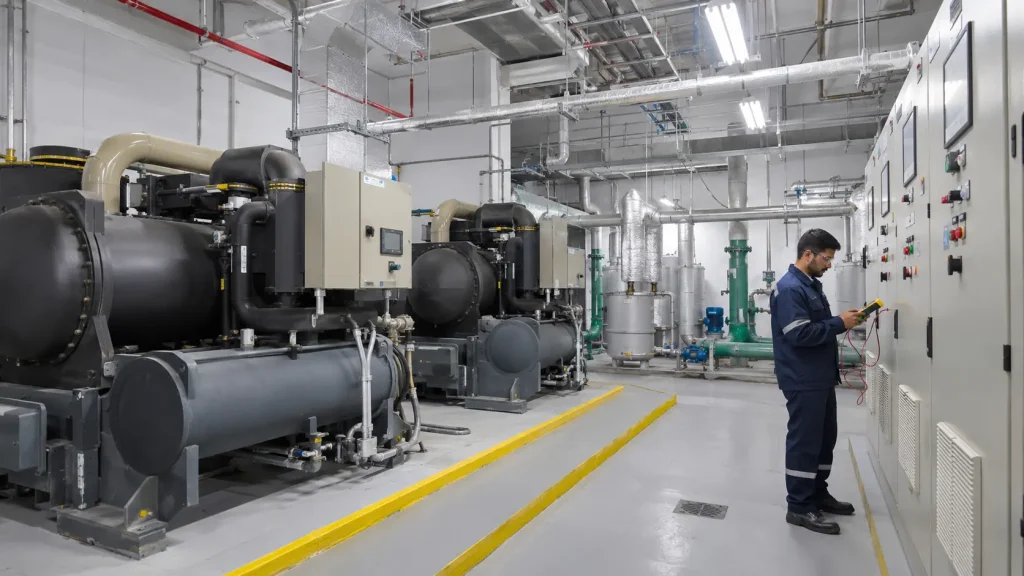
Reading The Warning Signs Before A System Fails
Valves are one of the more overlooked failure points. PICV, motorized, ball, gate, and pressure relief valves all wear differently depending on what’s running through them, and a sticking valve rarely announces itself until a zone stops heating or cooling properly. Insulation is another quiet one. Fiberglass, rockwool, and elastomeric insulation around pipework degrade with heat cycling, and once that happens, energy costs climb before anyone notices a physical problem.
Smart metering has become a practical way to catch these issues early rather than after a utility bill spikes. Ultrasonic water meters and BTU meters give facility teams actual consumption data instead of estimates, which makes it easier to flag a leak or an inefficient loop before it becomes a bigger repair.
What This Means For Building Owners And Contractors
None of this is about finding the cheapest quarterly checkup. It’s about matching the maintenance schedule to what a building actually runs on, whether that’s a naval facility, a commercial tower, or a private development, and treating mechanical, electrical, and plumbing as connected systems rather than three separate boxes to tick.
Final Thoughts
A plant room rarely fails all at once. It fails one overlooked valve, one degraded seal, one skipped inspection at a time. Seals and buildings that avoid emergency callouts are usually the ones treating MEP maintenance UAE conditions as routine, not an afterthought, with someone actually walking the plant room this quarter instead of just signing off on a log. When did someone last check yours in person?
FAQ
What exactly falls under MEP maintenance?
Mechanical, electrical, and plumbing maintenance covers three separate systems working together. Mechanical handles HVAC and air quality, electrical handles power and safety systems like fire alarms, and plumbing handles water distribution and drainage. A building running smoothly usually means all three are being checked, not just one.
How often should HVAC systems get serviced in the UAE?
Given the climate, most facilities benefit from checking HVAC systems more frequently than manufacturers might suggest for milder regions. Filters, refrigerant levels, and duct seals all wear faster under sustained heat. A seasonal check before summer peak, rather than waiting for a breakdown, tends to prevent the bigger repair bills.
Can one company realistically handle all three MEP disciplines?
Yes, and there's a real advantage to it. Coordinating separate contractors for mechanical, electrical, and plumbing work often means gaps where nobody owns the full picture. A single team that designs, installs, and maintains across all three tends to catch cross-system issues, like a valve fault triggering an electrical alarm, faster.
What happens if plumbing maintenance gets skipped in a commercial building?
Drainage systems and pump stations don't fail quietly. Skipped plumbing checks usually show up first as slow drains or unexpected water pressure drops, then escalate into backups or pump burnout. Water treatment components in particular need regular attention, since sediment buildup happens gradually and isn't always visible until output drops.
Do older buildings need a different MEP maintenance approach than new construction?
Generally, yes. Older buildings often carry a mix of legacy components and newer replacements, so a technician needs to recognize both generations of equipment. Newer builds tend to have more standardized systems, but that doesn't mean less maintenance, just a different diagnostic approach when something goes wrong.