Winch Spare Parts: Why Availability Beats Repair Speed
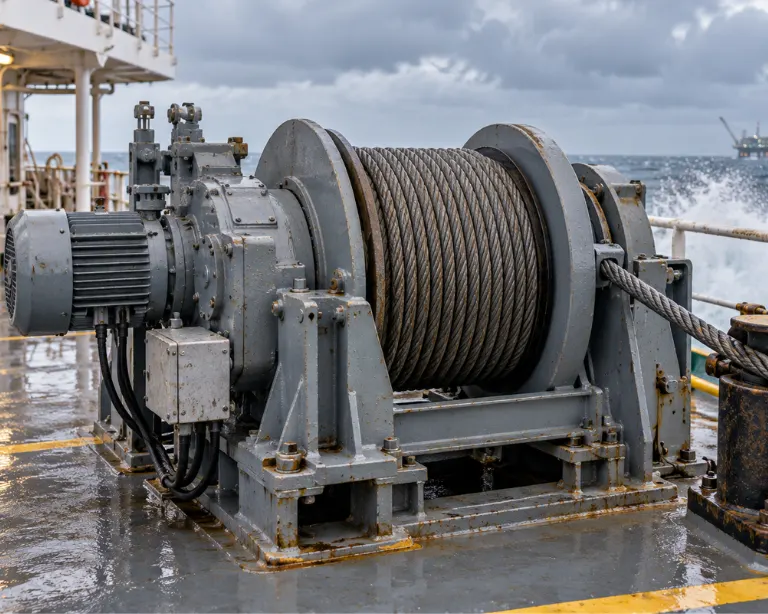
A worn brake solenoid on an electric winch does not announce itself. Dust and salt air work into the assembly for months before the winch finally stops holding the load. When that moment arrives, winch spare parts sitting on a shelf decide how long a vessel or site stays idle, not how fast a technician can turn a wrench.
Winch Downtime Usually Comes Down to Parts, Not Labor
Most winch failures trace back to a small set of predictable culprits. Hydraulic units lose pressure through a worn seal or a hose that has cracked from years of flexing. Electric winches burn through motor windings and seize brake solenoids under constant stop-start cycling, the kind wharf handling and pipe work put them through daily. Pneumatic systems let humidity into the air lines, and corrosion starts eating parts from the inside before anyone notices the drop in pulling power.
None of these failures are mysterious once a technician opens the unit. The delay comes after diagnosis, when the fix depends on a part that has to be sourced. A facility with a diagnosis but no matching seal, hose, or control board on hand loses days it never budgeted for, regardless of how skilled the repair crew is.
This is where sourcing matters as much as servicing. Being an authorized distributor for Brevini Power Transmission, Dana Motion System Italia, and P.T. Trading means a repair uses components sourced directly through the manufacturer rather than a generic substitute. Brevini’s winch and gearbox lines became part of Dana’s off-highway portfolio after Dana completed its acquisition of the business in 2017, a move that folded planetary gearboxes and winch drives into a larger industrial parts network rather than leaving them as a standalone supply chain. That kind of manufacturer backing is what keeps a stocked shelf actually useful instead of full of parts that no longer match current winch models.
Why Common Winch Spare Parts on the Shelf Change the Timeline
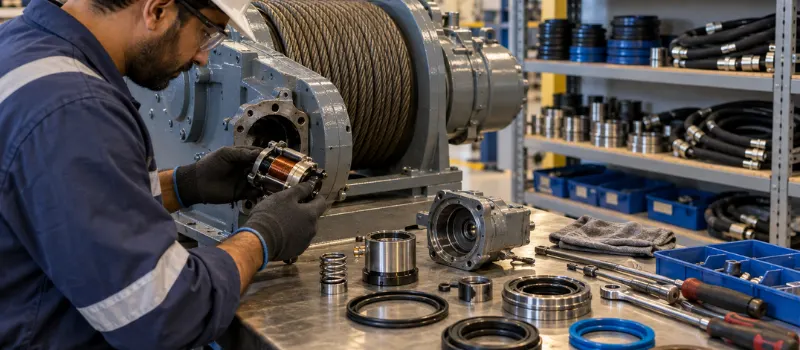
Keeping common winch spare parts in stock at a Dubai workshop shortens the gap between diagnosis and handover. A hydraulic seal, a set of brake linings, and a control board for an electric winch motor, these are the components that fail most often, and having them ready means a winch repair service does not stall waiting on a shipment from overseas. For anything unusual, in-house machining covers components no longer sold off the shelf, including custom parts for older or discontinued winch models where the manufacturer has moved on but the equipment hasn’t.
Cable and drum wear deserves its own mention here, since it rarely gets flagged until something gives. A frayed cable or a worn drum surface is a safety issue on a working winch, not a cosmetic one. Regulatory frameworks addressing rigging and material handling equipment generally require that equipment be inspected before use and pulled from service the moment a defect shows up, which is the same logic behind catching drum wear during scheduled maintenance rather than after a failure.
Marine Conditions Make Parts Turnover Faster
Winches used in marine mooring, anchor systems, or offshore platform work face harsher wear cycles than land-based equipment. Salt air corrodes electrical components faster, humidity gets into pneumatic valves sooner, and constant load cycling shortens the working life of hydraulic seals. A scheduled maintenance program that checks brake linings, cables, lubrication, and motor performance on a set interval catches most of this before it becomes an emergency call. But scheduled maintenance still depends on parts availability when something is flagged for replacement. A maintenance check that finds a worn seal and then waits two weeks for that seal defeats its own purpose.
For operators managing vessels or industrial sites across Dubai, Sharjah, and Abu Dhabi, the practical takeaway is straightforward. Ask a repair provider what they keep in stock before asking how fast they can respond. A fast callout with no parts on hand still ends in a wait. What actually gets a winch back under load is the combination of a diagnosis, a matching part, and a workshop that tests the unit under real pressure before it ships back out.
If your winch has been showing early signs of wear, a load test and inspection now costs less time than a breakdown later.
Final Thoughts
For operators managing vessels or industrial sites across Dubai, Sharjah, and Abu Dhabi, the practical takeaway is straightforward. Ask a repair provider what they keep in stock before asking how fast they can respond. A fast callout with no parts on hand still ends in a wait.
Seven Seas Machinery built its stock list and manufacturer distribution agreements around exactly this problem, keeping common winch parts on hand at its Dubai workshop so a diagnosis doesn’t sit waiting on a shipment. What actually gets a winch back under load is the combination of a diagnosis, a matching part, and a workshop that tests the unit under real pressure before it ships back out.
FAQ
How long does it usually take to get winch parts if mine isn't working?
Depends entirely on what failed. Common parts like seals, brake linings, or control boards that are kept in stock can go in the same day or two. Something rarer, especially on an older or discontinued winch model, might need custom machining, which takes longer but avoids weeks of waiting on an overseas shipment.
Does the brand of my winch matter for finding spare parts?
Somewhat. Being an authorized distributor for specific manufacturers means genuine parts for those brands, including Viking equipment, are easier to source quickly. For other brands, a workshop with in-house machining can still produce or match components even without a direct distributor relationship.
What's actually the biggest cause of winch downtime?
Waiting on parts, more often than the repair itself. A technician can usually diagnose a failed seal, worn brake lining, or corroded valve within a couple of hours. The days lost afterward almost always come from sourcing, not diagnosing.
Should I wait until my winch breaks down or get it checked regularly?
Regular checks win every time. Brake linings, cables, and motor performance wear gradually, and catching that wear during a scheduled service costs far less in time and money than an emergency breakdown mid-job, especially offshore, where a failure is a safety issue first.
Can older or unusual winch models still get parts, or are they basically stuck?
Not stuck, but it takes more work. When a part is no longer sold off the shelf, in-house machining can reproduce it to spec. It's slower than pulling a stocked part off a shelf, but it keeps older equipment running instead of forcing a full replacement.